How to Teach Your Child to Eat Healthy
We all want healthy children. Thanks to advances in medicine, newborn survival rates are now the highest in history. Even surgeries performed in the womb are possible today. We have access to advanced diagnostics that allow us to detect diseases at very early stages, before they develop. High hygiene standards have eliminated most infectious diseases, and antibiotics—although often overused in the past—can now effectively treat infections that used to be fatal.
And yet, despite these incredible achievements, the health of today’s children is increasingly concerning. Chronic conditions, metabolic disorders, allergies, gut issues, and neurodevelopmental problems are on the rise. Not everything comes down to food alone, but childhood is when a child’s taste preferences are formed—and these shape their food choices for life.
How Childhood Shapes Eating Habits
When I was a child, sweets were completely normal. Giving children sugary treats was a way of showing love—a reward, a gift when visiting family, birthdays, or other celebrations. Frequent dentist visits and fillings in almost every tooth were also the norm. Changing the way I ate later in life was difficult, and to this day I’m still working on it. What we eat in childhood truly stays with us forever.
My First Experiences With My Own Children
So when my first son was born, I was determined to help him build different habits. Especially because he was born with a congenital condition—I wanted to give him the best possible start. Around that time, I watched a documentary about the Maasai tribe. For them, drinking cow’s blood mixed with milk or even using cow’s urine is normal. I know—it sounds shocking. But if they can teach their children to accept such “delicacies,” then surely we can teach our children to eat diverse, healthy foods. Even more importantly, we can instill habits that will stay with them for life.
So how do you teach a child to eat healthy—not just to eat the “right things,” but to genuinely enjoy healthy foods and choose them independently in the future?
When a baby turns six months old, we often start complementary feeding with bananas or potatoes. Store-bought purees are usually based mostly on fruit. Meanwhile, according to Dr. Daniel Amen, a brain-health specialist, our diets should be built primarily around healthy fats, vegetables, and protein. That’s why Sebastian’s first foods were avocado with apple, egg yolk with grass-fed butter, and vegetables sprinkled with grated liver—a rich source of iron and vitamin A for eye health.

The Nutrition Rules We’ve Developed as a Family
Five years have passed since then. I raised my second child in the same way. We don’t keep sweets at home-they appear only occasionally (yes, for me too, especially at certain points in my cycle :-D). During these years, we developed several family food principles that I’d like to share with you.
1. Start Early
The earlier you introduce a variety of foods, the sooner your child accepts them as normal. The ideal age for introducing spirulina, chlorella, or green smoothies is around 18 months, though I started at six months. Children quickly get used to the green color and don’t find it strange.
2. Don’t Use Sweets as Rewards
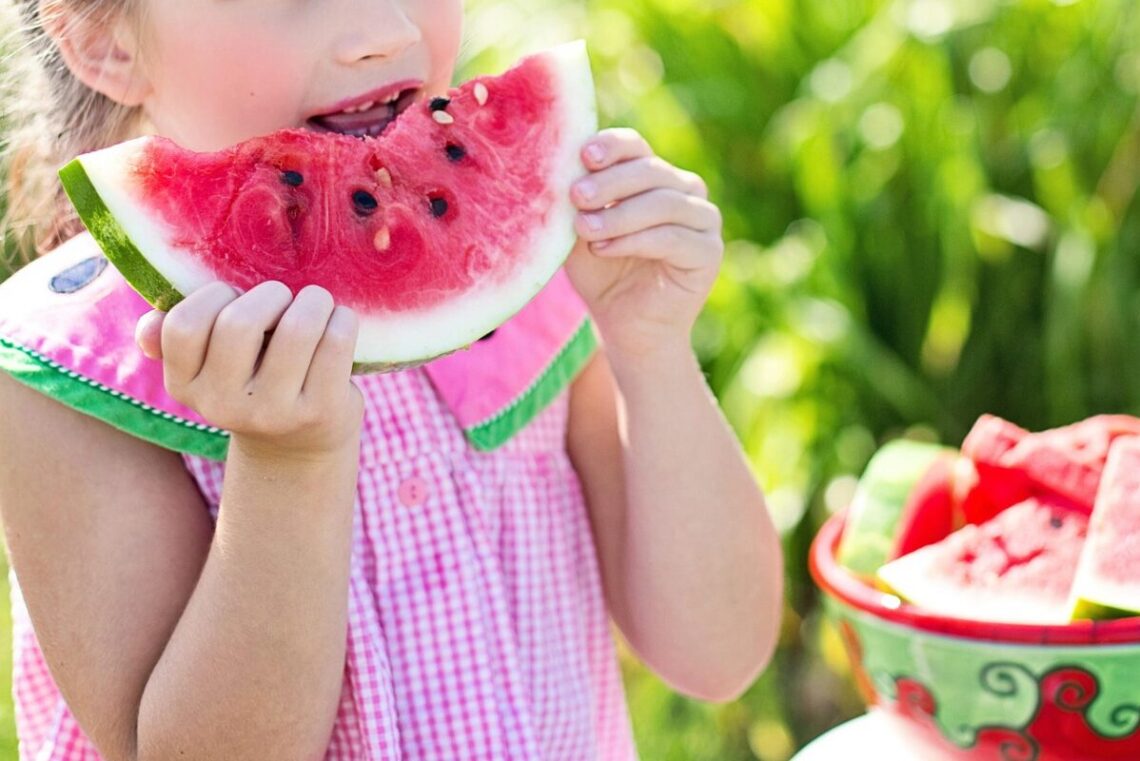
Offer fruit instead. In our home, the kids can eat as much fruit as they want, and as a “treat,” we give them more exotic ones like mango or persimmon. This teaches them that sweet can be natural and nutritious. We also offer dates, raisins, homemade gummies (recipe here), and homemade nut bars with maple syrup (click here for the recipe).
4. Natural Yogurt Instead of Store-Bought
Store-bought yogurts often contain huge amounts of sugar, colorants, and artificial sweeteners—all things your child doesn’t need. We use natural yogurt with honey and fruit instead.
5. Offer Something They Like Immediately After
Not every child will love everything right away. Neither of my kids liked fish oil—even mixed with yogurt. What worked best was promising a small treat right after giving omega-3, such as a piece of mango. These small “rewards” help introduce valuable foods without forcing.
6. Eat the Same Meals as Your Child
Modeling is key. Young children want to eat what their parents eat. If you want something you wouldn’t give your children, eat it in another room. Children believe what you do, not what you say. Actions speak louder than words.
8. Add Healthy Swaps
If your child is older and already has habits, think about healthier alternatives.
– If they love granola with milk, use grass-fed milk and make homemade sugar-free granola.
– If they eat chocolate daily, choose dark chocolate.
– If they drink instant cocoa mixes, make a healthier version: cocoa with coconut sugar (50/50).
9. You Choose What, They Choose How Much
This is the Division of Responsibility (DOR) by Ellyn Satter, an American dietitian and therapist.
Parents decide what is on the plate, children decide how much they eat. This helps children:
- develop appetite self-regulation,
- build a positive relationship with food,
- avoid pressure, punishment, or rewards related to eating.
10. New Foods = Multiple Exposure
A child may need 10–15 exposures to accept a new food. At first they’re wary—they need to smell it, touch it, taste it. Don’t get discouraged if your child doesn’t eat broccoli right away—keep serving it and show that you enjoy it.
11. No Labels: “Healthy / Unhealthy”
Children don’t understand health as an abstract concept. Instead of saying something is “healthy,” say what it does:
– “This food will give you more energy,”
– “Eating fish will help your brain grow so you can read books on your own.”
Show your child that food supports growth, development, and daily activities.
Conclusion
Once your child goes to preschool, you lose full control over what they eat. But you still shape their taste preferences and their relationship with food. By introducing diverse foods and healthy habits early, you give them a foundation that lasts a lifetime.
Of course, there are moments—holidays, birthdays, trips—when we allow more flexibility. We live in a society, and food is also pleasure and shared experiences. What matters is that these exceptions don’t disrupt the everyday habits you build at home.
Do you have your own tips for shaping healthy eating habits in children? Share them in the comments!


You May Also Like
Medicinal mushrooms in the daily diet

“The flu fighters”- @Patrick Holford’s book on natural flu and covid treatments.