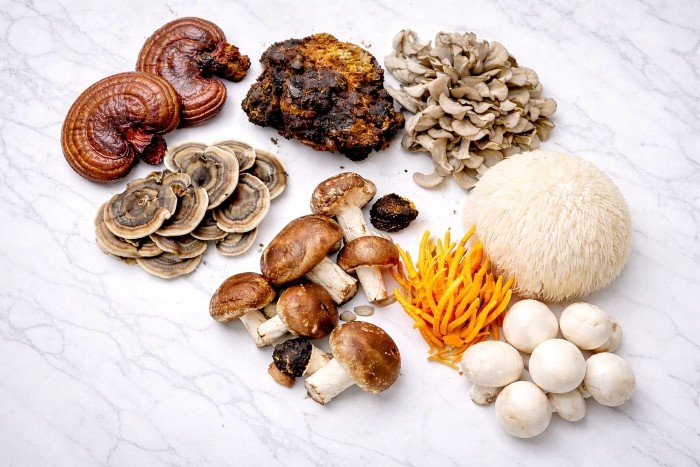
Medicinal mushrooms in the daily diet
Medicinal mushrooms, also known as functional or medical mushrooms, are appearing more and more frequently in supermarkets and cafés. They are available in capsule form, but in reality they are functional foods that can be easily incorporated into the daily diet.
I first encountered them in a café during a lunch break. I wanted to have a coffee, and a colleague recommended a mushroom latte. At first I was sceptical—I couldn’t imagine anything more off-putting. The drink contained no coffee and no caffeine—only frothed coconut milk, dried and powdered Reishi mushrooms, and a small amount of coconut sugar.
I tried it, and the taste was surprising. Not mushroom-like at all, but rather mildly chocolatey. I liked it so much that I bought a blend to use at home. What’s more, even my children fell in love with mushroom lattes—for them I prepare a version with Lion’s Mane and Reishi. In our home, it has completely replaced cocoa.
What are medicinal mushrooms and why are they worth knowing?
I learned about medicinal mushrooms during lectures. I knew they had health potential, but I had no prior practical experience with them. The term “medicinal” may sound exaggerated— in practice, these are food products, similar to dried wild mushrooms, but they are supported by a much larger body of scientific research.
Currently, medicinal mushrooms are widely available in the UK and increasingly also in Poland—in supermarkets (most commonly shiitake and Lion’s Mane) and cafés, usually in the form of hot drinks.
Research suggests that medicinal mushrooms may have a wide range of health benefits. They may, among other things:
- support the immune system,
- have anti-inflammatory, antibacterial, and antiviral effects,
- protect the liver, kidneys, and brain,
- support the cardiovascular system,
- improve digestion,
- help regulate blood sugar and lipid levels.
How medicinal mushrooms support children’s immunity

Mushrooms such as Reishi, Shiitake, and Lion’s Mane contain β-glucans—compounds known for their effects on the immune system.
Studies conducted in Medellín (Colombia) showed that in children aged 3–5 years, daily administration of Reishi preparations for 12 weeks led to an increase in the number of immune cells in the blood.
Other studies indicate that medicinal mushrooms may support immunity and help fight viral infections. Daily use of a preparation made from Pleurotus ostreatus (oyster mushroom) for several months in children was associated with a reduced number of respiratory tract infections and less frequent flu-like symptoms.
In the same study conducted in adults, supplementation with Cordyceps was also associated with a significant increase in the number of NK (natural killer) cells and lymphocytes compared to the placebo group. However, this study was conducted in adults—Cordyceps is generally not recommended for children due to its potentially stimulating effects.
NK cells are a key component of innate immunity—they recognise and eliminate damaged or infected cells before an infection develops. Three months of supplementation in athletes was also associated with a lower incidence of upper respiratory tract infections.
Support in cancer treatment
Beta-glucans present in medicinal mushrooms are being studied for their potential role in supporting oncology therapies. They may support the immune system and help alleviate some side effects of treatment.
Clinical studies suggest that medicinal mushrooms may support cancer patients mainly through modulation of the immune system and possible direct antitumour effects. The most extensively studied include shiitake, maitake, reishi, and Coriolus versicolor (PSK).
Observed effects include:
- improved quality of life and reduced fatigue, depression, pain, nausea, and chemotherapy-related side effects,
- beneficial immunological changes (NK cell activity, cytokines),
- prolonged survival and reduced recurrence in colorectal and hepatocellular cancers (particularly PSK and AHCC),
- lower risk of breast and prostate cancer with regular mushroom consumption in the diet.
Mushrooms were generally well tolerated, but the importance of supplement quality and caution when combining them with oncological immunotherapy is emphasised.
Lion’s Mane (Hericium erinaceus) – for brain development
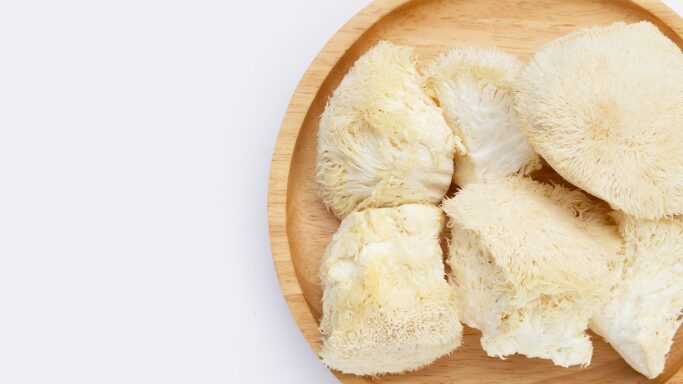
Particular attention should be given to Lion’s Mane (Hericium erinaceus), also known as hedgehog mushroom. In the UK it is becoming increasingly available—both in supermarkets and in powdered or extract form. It is often referred to as the “mushroom for the mind” due to its potential to support brain and nervous system health.
In powdered form, it can be easily incorporated into the diet, for example by mixing it with warm plant-based milk and a small amount of coconut sugar. This is a convenient and quite pleasant-tasting option.
Scientific studies indicate that Lion’s Mane may:
- support brain function and neural connections,
- positively influence mental well-being by reducing symptoms of stress and low mood,
- exhibit anti-inflammatory and antioxidant effects that may protect nervous tissue,
- slightly improve processing speed and reduce perceived stress in healthy young individuals.
In the scientific book chapter “The Role of Medicinal Mushrooms in Brain Development and Aging”, the authors point out that during early brain development these mechanisms may support the maturation of cognitive functions, synaptic plasticity, and the formation of stable neural networks essential for learning and memory. The collected data suggest that medicinal mushrooms may provide natural support for cognitive vitality at different stages of life.
Can medicinal mushrooms reduce epileptic seizures?
A significant proportion of people with epilepsy do not respond adequately to standard pharmacological treatment. Medicinal mushrooms such as Reishi (Ganoderma lucidum) and Lion’s Mane (Hericium erinaceus) exhibit neuroprotective effects and are being studied as potential supportive therapies.
One study described a group of 19 participants (including caregivers of children and minors) who used medicinal mushrooms as an adjunct therapy. Most participants (14 people) had drug-resistant epilepsy. Participant reports indicated:
- a reduction in the frequency and severity of seizures,
- improvements in cognitive function and development,
- an overall improvement in quality of life.
Human studies have also shown that Ganoderma lucidum spore powder may reduce seizure frequency and improve patients’ quality of life.
Lion’s Mane is one of the best-researched functional mushrooms. It exhibits antimicrobial, antitumour, neuroprotective, anti-inflammatory, and metabolic effects, as well as protective potential for the brain, liver, kidneys, and cardiovascular system. It may also reduce the effects of brain injury by decreasing neuroinflammation.
In animal model studies, H. erinaceus demonstrated anti-epileptic effects by protecting hippocampal neurons and reducing the number of seizures.
Accounts from parents participating in the study
“My daughter’s seizures stopped completely and did not return after introducing Reishi mushroom powder into her diet.”
“In the first week, she achieved three developmental milestones in occupational therapy, physiotherapy, and speech therapy. After eight weeks of mushroom use, her development was assessed as age-appropriate—she no longer required physiotherapy. Previously, she fell on average about 10 times a day. These changes allowed her to catch up on delayed developmental milestones.”
These are just two of many remarkable stories that can be found in the cited study.
Maitake mushrooms may support ovulation in women with polycystic ovary syndrome (PCOS)
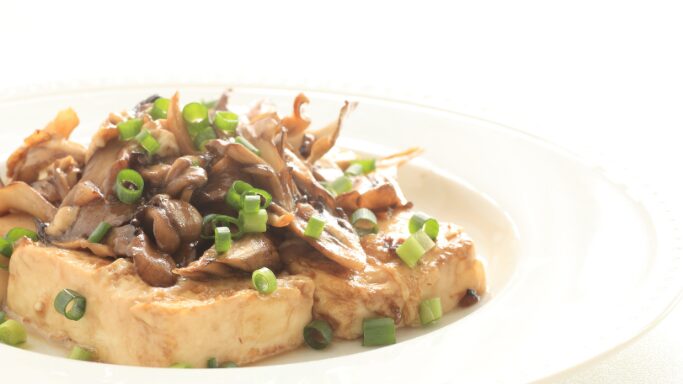
PCOS is often associated with insulin resistance, which interferes with ovulation. Because maitake mushroom extract improves insulin sensitivity, researchers investigated whether it could help restore ovulation in women with PCOS.
In the study, women with PCOS received either maitake extract or a hormonal drug (clomiphene). Some women also received a combination of both when previous treatment had been ineffective. Ovulation was assessed using ultrasound.
Results:
- Ovulation occurred in approximately 77% of women taking maitake extract alone.
- In patients for whom previous treatment had failed, the combination of maitake and clomiphene successfully induced ovulation in most cases.
Conclusion: The study suggests that maitake extract may independently support ovulation in women with PCOS and may also be an effective adjunct when standard clomiphene therapy does not produce results.
In conclusion
It is worth emphasising that medicinal mushrooms can be very easily incorporated into the daily diet.
In beverage form, they work well with frothed milk: Reishi, Lion’s Mane, and Cordyceps (the latter is not recommended for children, and personally I am not fond of its taste).
Mushrooms such as shiitake, maitake, and increasingly even Lion’s Mane are now available in regular supermarkets. Shiitake taste great, for example, with scrambled eggs, while maitake have a classic, distinctly mushroom-like flavour and also work well in simple dishes.
There is no need to start with supplements—often it is enough to simply return to eating mushrooms.
Source:
Medicinal Mushrooms: Bioactive Compounds, Use, and Clinical Trials
An Overview of the Nutritional and Potential Health Benefits of Medicinal Mushrooms
The Role of Medicinal Mushrooms in Brain Development and Aging


You May Also Like

Gluten free gingerbread with coconut sugar

Nutrition and Stretch Marks: Care for Your Skin from Within!